Vietnam to Add Pre-A1 Level to Foreign Language Proficiency Framework
In addition to levels A1 to C2, the foreign language proficiency framework for Vietnam is expected to include Pre-A1 (Below Level 1), along with more detailed descriptions of the required competencies for each skill.
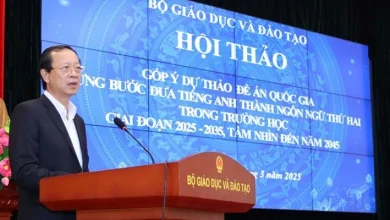
The Ministry of Education and Training announced on November 26 the addition of a Pre-Level 1 alongside the current 6 levels to cover the entire spectrum of language proficiency, from the introductory stage to mastery. This move meets the demand and trend of teaching foreign languages to preschool and primary school ages, aligning with the policy of making English a second language in schools.
According to the Ministry, the new proficiency framework also creates a favorable legal corridor for schools to strengthen international cooperation and unify domestic teaching activities with the assessment standards of international testing organizations, especially for English.
The new proposed foreign language proficiency framework for Vietnam is as follows:
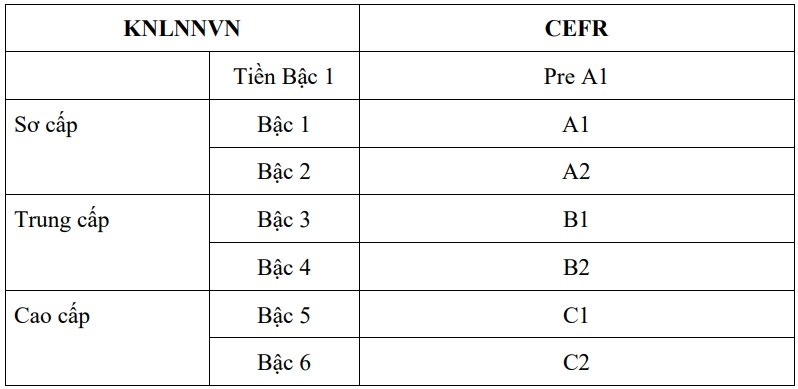
This framework was developed based on the Common European Framework of Reference for Languages (CEFR) and several English proficiency frameworks from other countries, combined with the actual situation and conditions of teaching, learning, and using foreign languages in Vietnam.
In the old framework, issued in 2014, foreign language proficiency was divided into 3 levels (elementary, intermediate, and advanced) and 6 sublevels (from level 1 to 6, compatible with levels A1 to C2 in the CEFR).
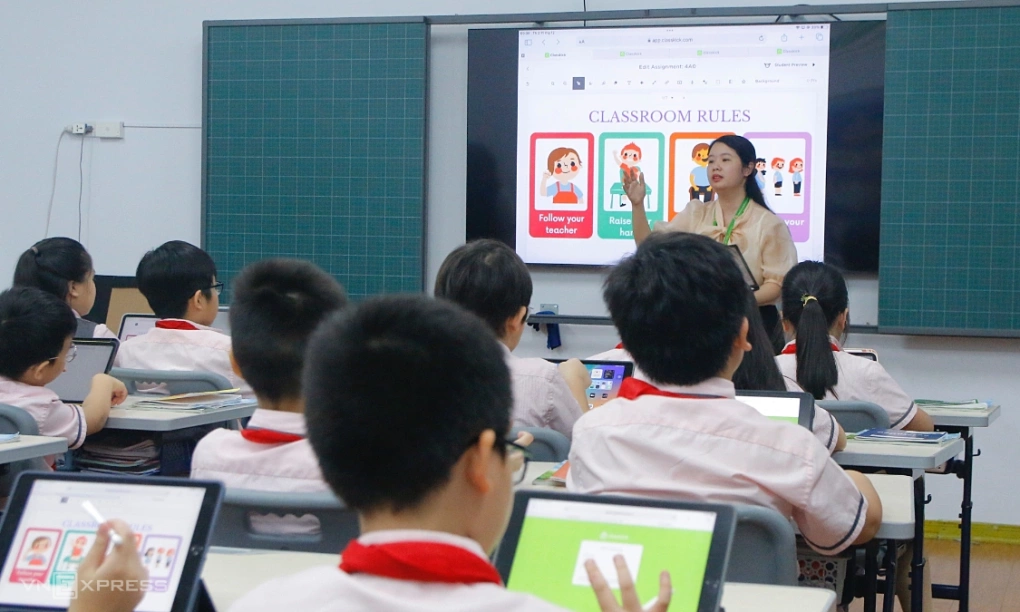
A science class taught in English for primary students in Hanoi, December 2023. Photo: Thanh Hang
In addition, the proficiency for each skill of listening, speaking, reading, and writing is described in more detail to serve as a reference for managers, curriculum development experts, textbook authors, teachers, and learners.
For example, with spoken interaction skills, the current framework describes 6 levels based on situations: participating in conversation, transactions for goods and services, and interviewing and being interviewed.
According to the draft, spoken interaction skills include: understanding interlocutors, conversation, informal discussion (with friends), formal discussion (meetings), goal-oriented cooperation (e.g., discussing a document, organizing an event), transactions for goods and services, information exchange, interviewing and being interviewed, telecommunication communication, and online communication.
The Ministry of Education and Training is currently gathering feedback on the draft foreign language proficiency framework for Vietnam, which is expected to take effect from January 1, 2027.
Source: https://vnexpress.net/them-bac-pre-a1-trong-khung-nang-luc-ngoai-ngu-cua-viet-nam-4986422.html